Where we have got to
Model fitting and inference for infectious disease dynamics
The likelihood
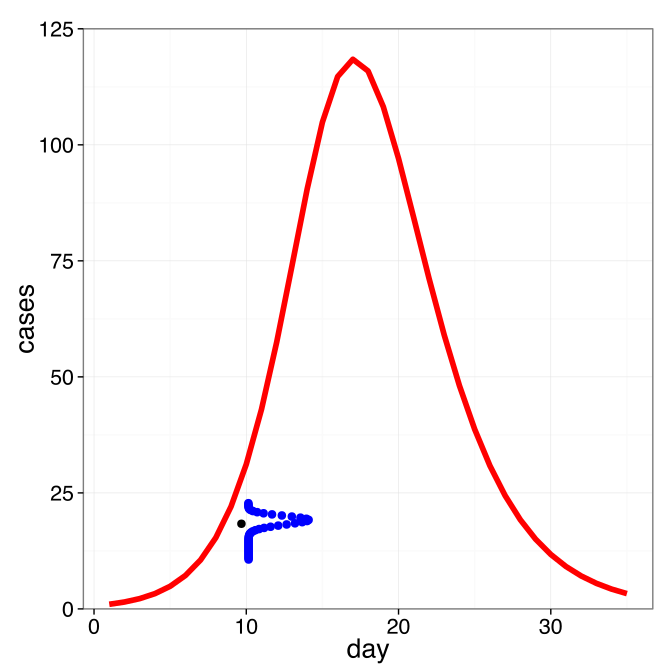
Each observation gets a distribution around the model output, . If they are conditionally independent given :
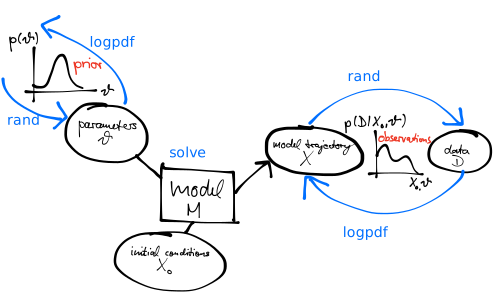
Why sample?
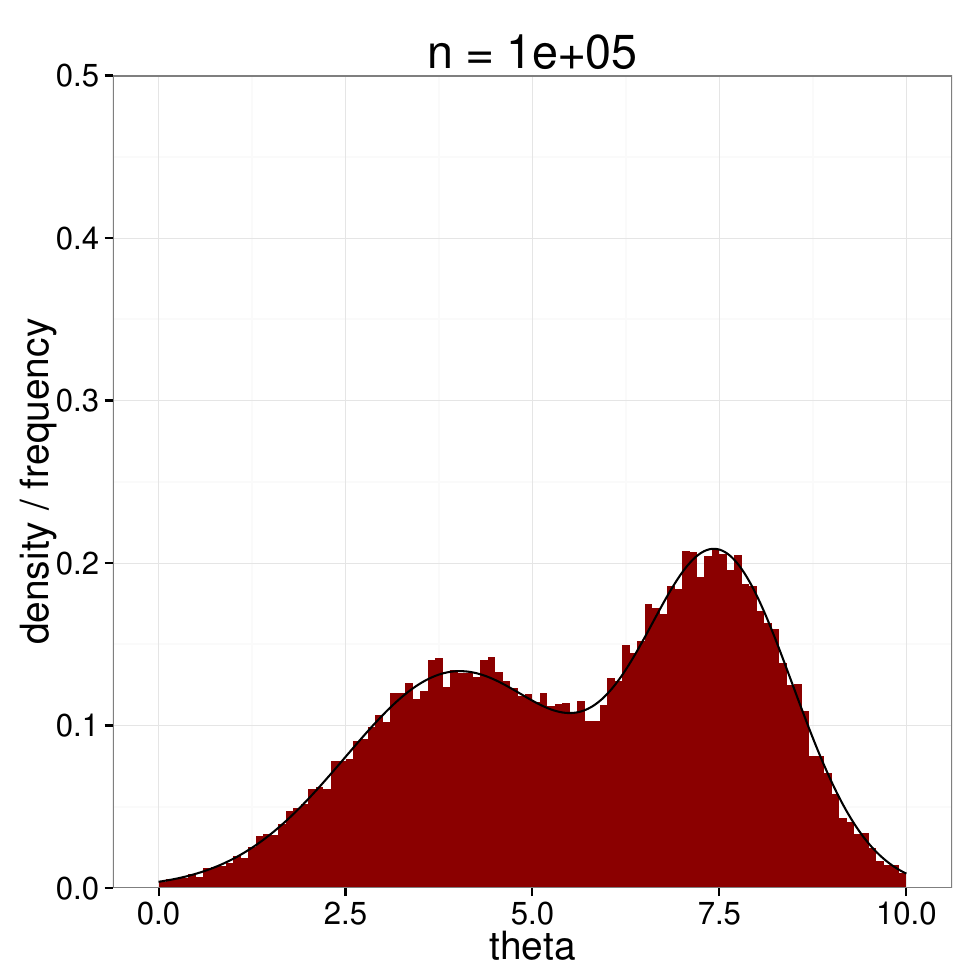
Samples , , , let us calculate parameter means, quantiles etc. and make predictions from the model.
Rejection sampling
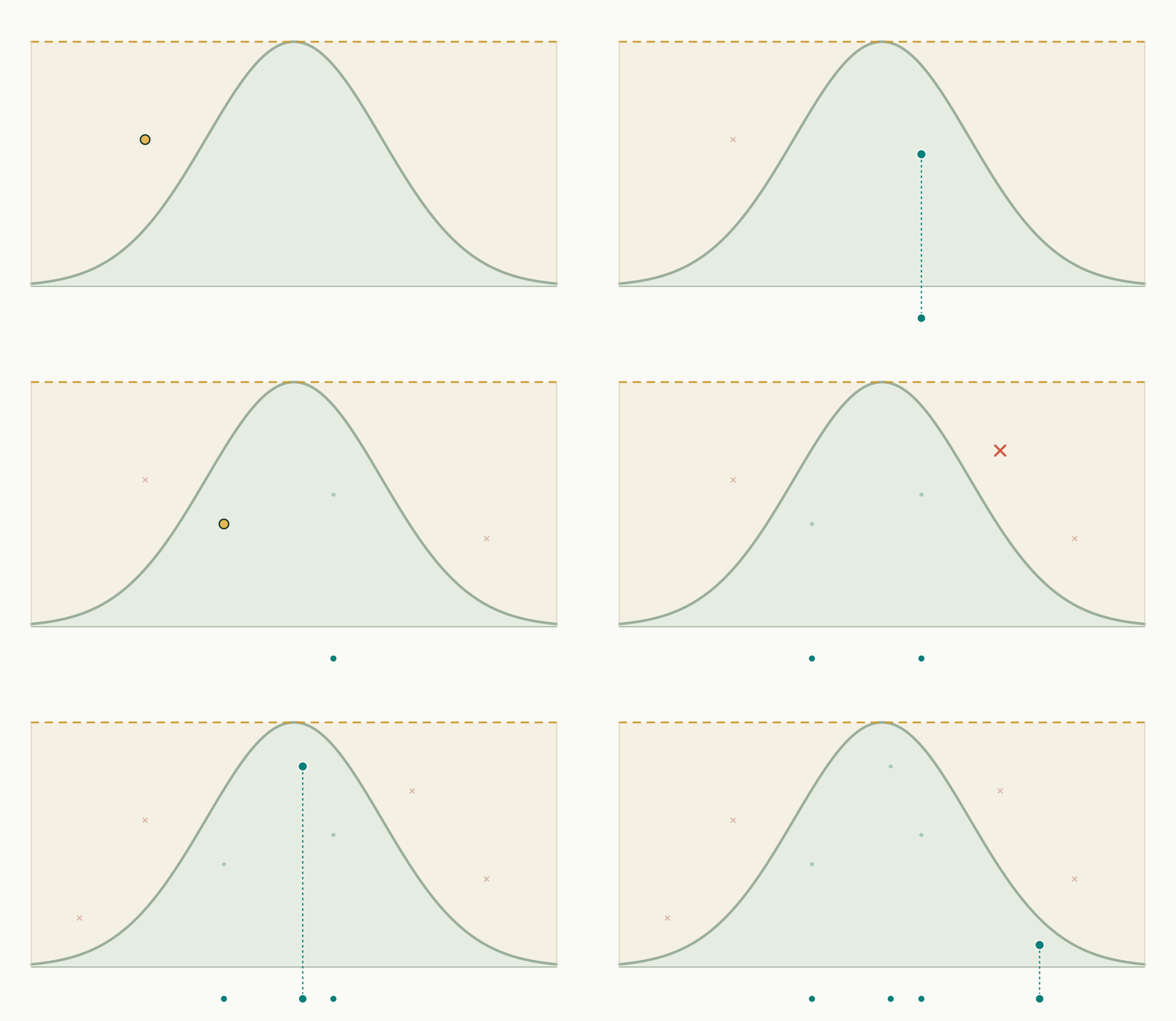
It draws from the posterior, but the acceptance rate collapses as the number of parameters grows.
Metropolis-Hastings
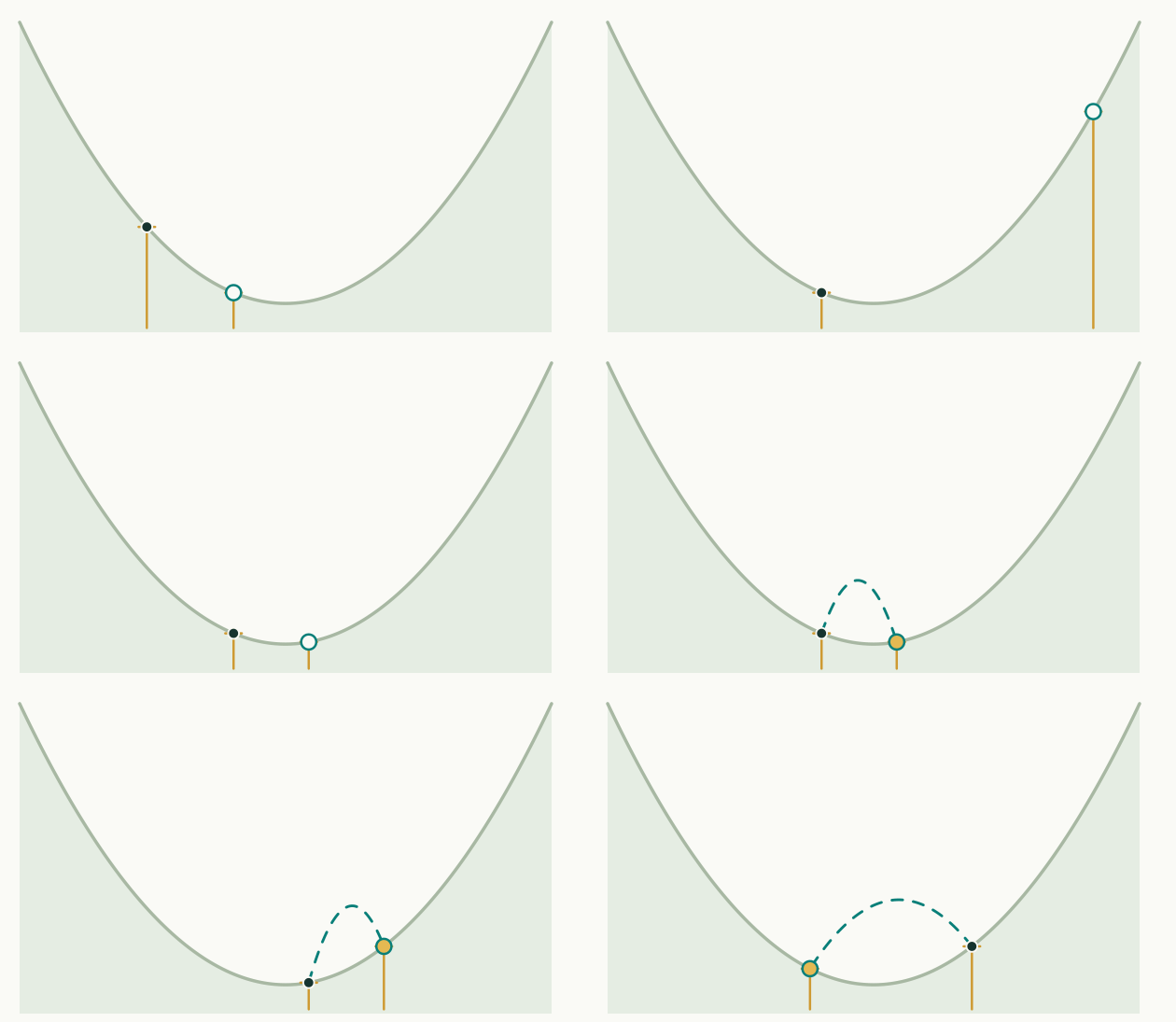
Propose from where you are, and accept with probability
NUTS
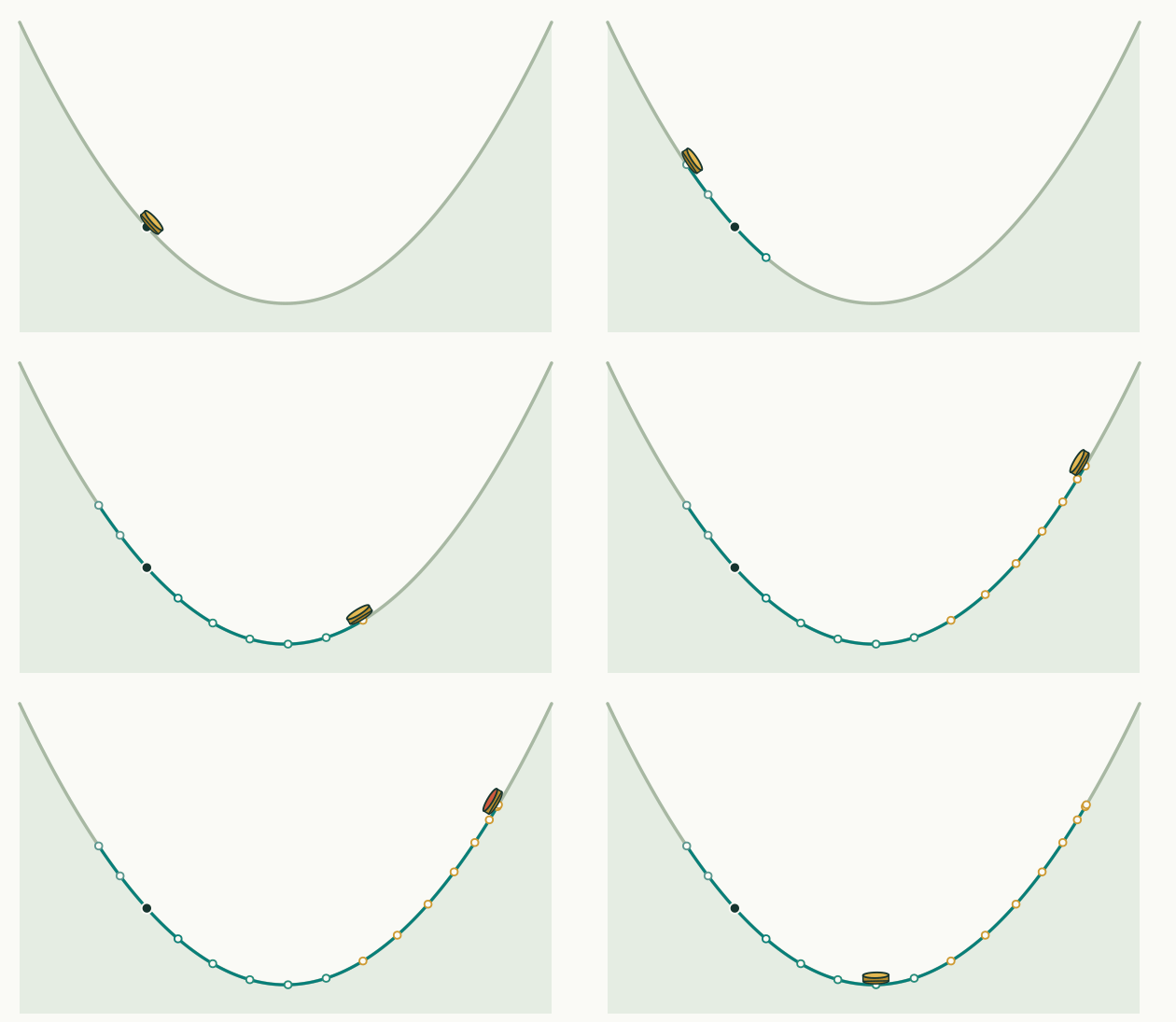
Hamiltonian Monte Carlo uses the gradient to move with the shape of the posterior, and NUTS adapts the step size and stops each trajectory when it turns back on itself. Usually no proposal tuning at all, and therefore a sensible default if it can be used.